
A sewer line has no universal cleaning schedule. A clean, modern pipe with no trees nearby may go years without a visit, while a clay or cast iron line with roots and a backup history may need attention every year or two. The right interval is the one your pipe shows you.
Cleaning every house on the same calendar wastes money on some and leaves others to fail. A better approach is to find your own pattern: have the line looked at with a camera, note what it shows and set a rhythm from that.
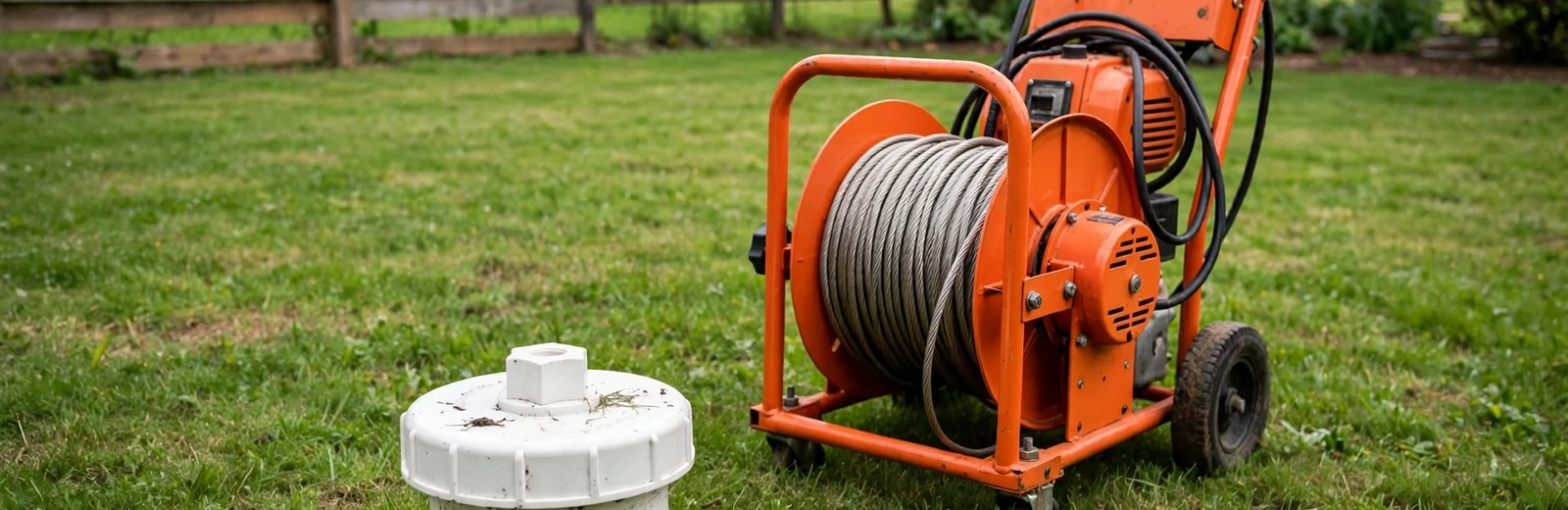
Sewer line cleaning is the removal of grease, roots, scale and debris from the line that carries waste from the house to the City's main. It can be done with a cable machine or with high-pressure water.
Four things that set your interval
Pipe material and age
Clay and cast iron tend to roughen and crack with age, which catches paper and roots. Newer plastic pipe is smoother and holds joints better. The city plan says 30 percent or more of Sidney homes were built before 1950, so older pipe is common.
Trees and roots
Roots search for moisture and enter at joints. A big tree over the line shortens the interval, and a line with no trees nearby lengthens it.
What goes down the drain
Grease, wipes and paper towels build up. A household that keeps these out of the line has a longer interval than one that does not.
Backup and slowdown history
A line that has backed up once will likely do it again unless the cause was fixed. That history is the best predictor of the next event.
A starting rhythm by situation
These are general starting points, not rules. A camera inspection should confirm or change them.
| Your situation | A reasonable approach |
|---|---|
| Newer plastic line, no trees, no problems | Camera look only if you buy the house or notice a slowdown |
| Older clay or cast iron line, no known problems | Camera inspection once, then decide from what it shows |
| Mature trees over the line | Plan on periodic cleaning, with intervals set by what the last visit found |
| One past backup, cause not found | Camera inspection soon, then a cleaning schedule if roots or scale show |
| Repeated slow drains in several fixtures | Treat as a current problem and call now |
A schedule that came from a camera is better than a guess. Cleaning without looking is a repair done blind.
Signs that the answer is now
Do not wait for a calendar date when the house tells you something. Slow drains in more than one fixture, gurgling in a tub when the washer drains, and a floor drain that burbles all point to the main line rather than a single trap.
A backup in the lowest drain of the house is the clearest signal. If sewage is coming up, stop using water, keep people and pets away from the area and call. Do not run the dishwasher or flush while you wait.
A smell near the cleanout or in the yard can also mean a broken section. In that case a cleaning will not help, and a sewer inspection with a camera is the right first move.
Call and we will book a camera look so the schedule comes from evidence.
Who owns what in Sidney's sewer system
In the City of Sidney's inflow and infiltration program, the property owner is responsible from the building to the City's main and tap. That means a root problem in your lateral is yours to fix, while the main is the City's. The City's wastewater treatment plant at 1091 Children's Home Rd receives what leaves the pipe, which is a reminder that grease and wipes do not disappear at the property line.
In project areas that received a notice, the City requires owners to have the building drain and sewer professionally inspected by video and sent in. That inspection often shows the same information a cleaning schedule needs. If you got a notice, follow it. If you did not, call Underground Utilities at 937-498-8157 to ask whether your street is in a project area.
The city plan notes that inflow and infiltration exposes property owners to flooded basements, so a line that is clear and sound helps your own basement as well as the system.
Cable or water: how the cleaning is done
Two methods do most of the work. Which fits depends on what is in the pipe.
Cable machine
- A rotating cable with a cutting head bores through a blockage.
- Works well on roots and soft clogs.
- Opens a path but can leave grease on the pipe wall.
- Usually less costly than a water jetting visit.
Hydro jetting
- High-pressure water scours the pipe wall clean.
- Strong on grease and scale and on roots when paired with the right nozzle.
- Gives a cleaner pipe, which can lengthen the interval.
- Needs a sound pipe, so a camera comes first.
Maintenance habits between visits
Keep grease out of the drain and put it in the trash. Skip wipes, even the ones labeled flushable, and use a mesh strainer in the kitchen sink and in showers.
Know where your cleanout is. It is a capped pipe, usually near the foundation or in the basement, and it lets a plumber reach the line without pulling a toilet. Keep it clear of mulch and landscaping.
If a tree is growing over the line, the cost of yearly cleaning adds up faster than the cost of other measures. Ask a plumber whether the root intrusion is at a joint that can be repaired, which can end the cycle. Ask to see what the cable pulls out during sewer line cleaning, since roots, grease and scale each point to a different cause.
Setting your own schedule
Start with a camera, because it turns a guess into a record. The recording shows pipe material, sag, cracks and root entry points. Before hydro jetting, a camera should confirm the pipe can take the pressure.
From the camera, you can pick one of three paths. If the pipe is clean and sound, do nothing and recheck when something changes. If it has roots or scale, clean it and schedule a recheck at the interval the plumber suggests. If it has damage, repair first, because cleaning a broken pipe only delays the failure.
If you live outside Sidney, the same method applies in Piqua, where the City sewer rules are its own, and in Jackson Center. Ask your village or city utility about lateral rules, since they differ from town to town.
Common questions
Who is responsible for my sewer lateral in Sidney?
Under the City of Sidney's inflow and infiltration program, the property owner is responsible from the building to the City's main and tap. The City handles the main itself. Call Underground Utilities at 937-498-8157 for questions about your address.
Can I clean my own sewer line?
A small hand auger can clear a clog near a fixture. A main line needs a machine and a camera. Do not use harsh drain chemicals, because they can damage pipe and are dangerous for the next person who works on the line.
Does cleaning a sewer line damage the pipe?
Not when done properly on a sound pipe. A camera first tells us whether the pipe can take the pressure or a cutting head. Cracked or collapsed pipe needs repair instead.
Will tree roots keep coming back after cleaning?
Often, yes, if they enter through a joint or crack that remains open. Cleaning clears them, but repair at the joint is what ends the cycle.
What do I do when sewage backs up?
Stop using water, keep people and pets away, and avoid contact with the sewage. Call us on the 24/7 line. If the cause is the City main, the City can advise.
Should I clean the line before buying a house?
A camera inspection before closing is often more useful than a cleaning. It shows pipe material and condition, and you can negotiate from what it finds.