
If drains are backing up into your house, stop using water in the house and keep clear of any floor drain that is overflowing. Then call our 24/7 line at (855) 575-2890. A line that is fully blocked can often be opened with a cable the same night, and we tell you whether jetting should follow.
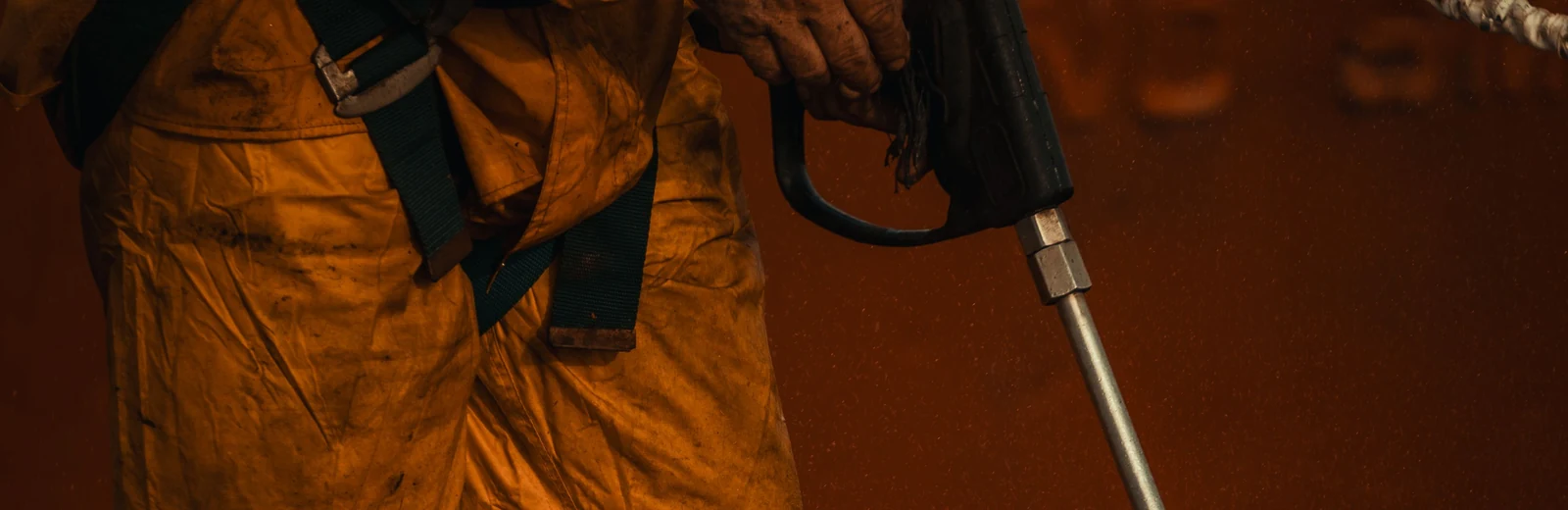
Hydro jetting is a drain cleaning method that sends high pressure water through a hose and nozzle to scrape the inside of a pipe clean. It removes the grease, scale and silt that a cable leaves behind on the walls.
Most people do not search for jetting. They search for a drain that keeps backing up. This page explains when the symptom points to jetting, when it does not, and what we do at night versus on a planned visit. Permit-required work follows the Ohio Plumbing Code, which was updated effective March 1, 2024.
From repeat backups to the right method
A drain that clears and then slows again within weeks has not been cleaned, only opened. A cable pushes a hole through the middle of a clog and leaves the coating on the pipe wall. The next load of grease sticks to that coating, and the opening narrows again.
Three patterns tend to point toward jetting. Kitchen and laundry lines that fill with congealed grease. Cast iron or older clay lines with rough scale that traps paper. Lines with fine roots that regrow after every cut, since a cable trims the roots and water can wash out more of the mass.
If your problem is one slow fixture, start with ordinary drain cleaning. Jetting makes sense when the same line has been cabled more than once, or when a camera shows heavy buildup along the wall.
Problems jetting handles well
Grease in kitchen branches
Fat that has hardened inside the pipe turns to a pasty coat. Hot, high pressure water softens it and flushes it out of the line.
Scale inside older iron pipe
Rough scale snags paper and wipes. Jetting with a chain or scouring head knocks off loose scale, though we do not push a nozzle through weak pipe.
Soft sludge and silt
Soap, hair and sediment settle in low spots and in long runs. Water pressure moves them out where a cable would only poke through.
Fine root growth
Small roots entering at joints can be cut and washed out. Larger roots are usually cut first and then the line is flushed clean.
Floor drain and laundry lines
Lint and detergent residue pile up in basement lines. Jetting these runs is often quicker than repeated cabling.
Jetting compared with cabling
Both tools clear drains, and a good plumber uses both. The choice depends on what is blocking the line and how healthy the pipe is.
| Question | Cable machine | Hydro jetter |
|---|---|---|
| What does it do? | Cuts a hole through the clog | Scours the pipe wall clean |
| Best for | Single fixtures and sudden blockages | Repeat clogs, grease and scale |
| Pipe condition needed | Works on most pipe | Needs sound pipe, check old lines first |
| Typical timing | Often done on the first visit | Often scheduled after a camera look |
| Leaves residue on the wall | Often | Rarely |
For how cabling works and where it falls short, see our page on drain cleaning for sinks, tubs and floor drains.
Stop using water and call. A plumber is on the line any hour.
When jetting is the wrong tool
High pressure water can hurt a pipe that is already weak. A cracked clay line, a collapsed section, a belly full of water, or thin cast iron may not survive the pressure, and a blowout would turn a cleaning into a dig.
That is why we look first when the line is old, when it has backed up repeatedly, or when a cable hits something it cannot pass. A sewer inspection with a camera shows cracks, offsets and bellies before any water goes in. If the picture shows damage, the answer changes to repair, and our sewer line repair page explains the options.
A clog that jetting will not fix is a pipe that has collapsed or shifted. No amount of water pressure can rebuild that.
How a jetting visit runs
Open the line
We find a cleanout or pull a fixture to reach the pipe, and we cable or camera the line if the pipe condition is unknown.
Choose the nozzle
Nozzle and pressure are chosen for the pipe size, the material and what is stuck in it.
Work through the line
The hose feeds in, jets pull it forward, and we stop wherever the pipe resists so we do not force it.
Pull back and rinse
Debris is flushed down the line while the hose is drawn out, then we run water to confirm full flow.
Repeated backups and the City's sewer line
The City of Sidney treats sewage at its wastewater plant at 1091 Children's Home Rd, and the owner is responsible for the building sewer from the house to the City's main. If backups keep coming from the building side, the repair or cleaning is the owner's to arrange.
Clean water in the sanitary line adds to the load. The City's inflow and infiltration program names downspouts and sump pump connections as sources of that water, so check where yours drain before you spend on a cleaning.
What decides the price of jetting
We cannot quote a number over the phone because the line, the cause and the access vary. After we see the pipe, you get a clear price before work starts.
A sudden sewage discharge is often treated differently by insurers than slow, repeated seepage, and backup coverage can be a separate endorsement. Take photos and ask your insurer what your policy says.
After the jetting: keeping the line open
A clean line stays clean longer if the source is dealt with. Keep cooking fat out of the sink, use a strainer in tubs and showers, and keep flushable wipes out of the toilet. Roots keep growing, so a root-prone line may need cleaning again on a schedule you set with the plumber.
If the backup reached the main, our sewer line cleaning service covers the building sewer from the house to the City's main. We also work in Piqua and the surrounding area.
Common questions
Do you handle hydro jetting emergencies at night or on weekends in Sidney?
Yes. Our line is open 24/7, including nights, weekends and holidays. For an active backup we usually open the line first with a cable and decide on jetting once the water is moving. Planned jetting can be booked for the next open day.
How do I know if I need jetting or just a cable?
A single slow fixture is usually a cable job. A line that clogs again within weeks, or one packed with grease or scale, is a candidate for jetting. A camera look tells us which.
Can hydro jetting damage my pipes?
On sound pipe, no. On cracked, collapsed or very thin pipe it can. We check old lines with a camera first and stop if the pipe resists, so we do not turn a cleaning into a repair.
Will jetting remove tree roots?
It can cut and wash out small roots. Heavy root masses are usually cut with a cable first and then flushed. Roots grow back, so a root-prone line may need cleaning again.
Is the building sewer my responsibility in Sidney?
Yes. The owner is responsible for the building sewer from the house to the City's main and tap. Call the Underground Utilities office at 937-498-8157 if you are unsure where the City's side begins.
How long does a jetting visit take?
It depends on line length, access and what we find. A short branch can be done in a visit, and a long, heavily coated line may need extra passes. We tell you what to expect before we start.