
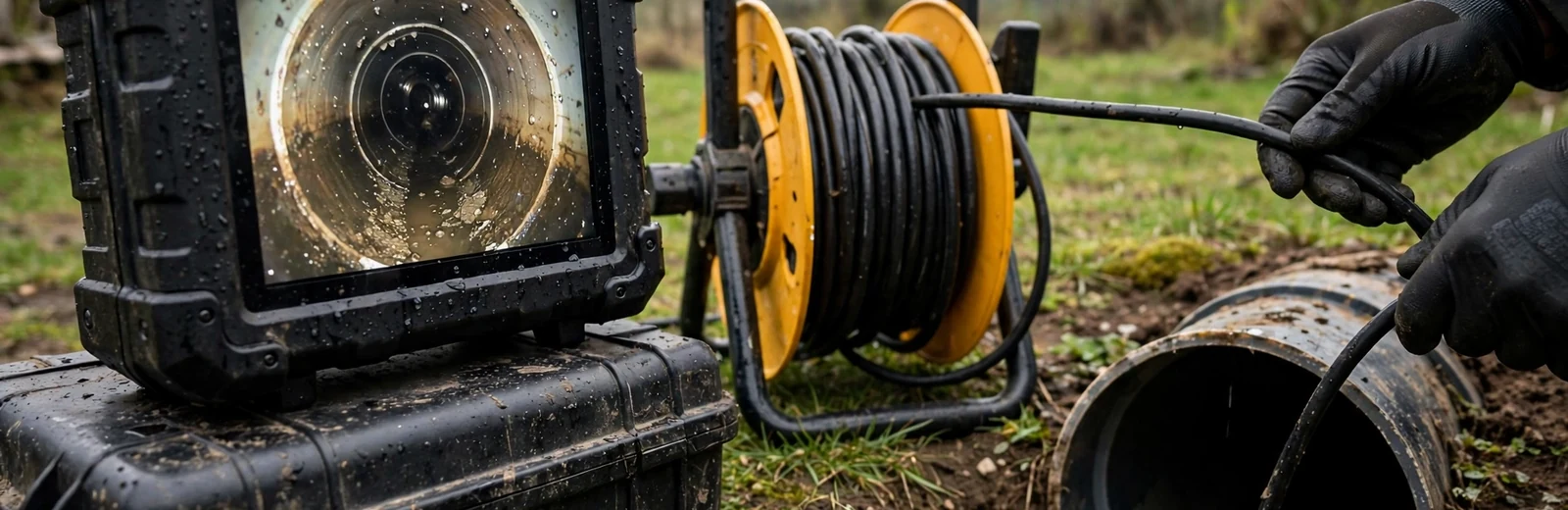
A sewer inspection is a camera survey of the pipe that carries wastewater from your house out to the City's main. A small waterproof camera on a flexible rod travels the line, and you see the inside of the pipe on a monitor as it goes.
Most people book one for a reason: they are buying a house, a drain keeps backing up, or the City sent a notice asking for a video. In each case the camera replaces guessing about a pipe you cannot see.
Inspections are planned visits, and we schedule them at your convenience, with same-day appointments when available. Our 24/7 line is still open if the line turns into a backup before your visit.
How we run the camera through your line
The visit follows a simple order, and most of it is done from one access point.
Find the way in
We use a cleanout if there is one. Without one, we may pull a toilet or work through a roof vent.
Clear what blocks the view
If grease or debris hides the wall, the line may need a cable pass or cleaning before the camera can see.
Feed the camera
The camera moves toward the City's main while we watch the monitor and note anything unusual.
Locate and note problems
When the image shows damage, we note how far along the line it sits, so a repair crew knows where to dig.
What the picture shows
Offset joints
Two pipe ends that no longer line up. Waste catches on the ledge, and roots find the gap.
Roots
Fine hair-like roots at a joint, or a thick mass that fills the pipe. They show where the pipe has been breached.
Bellies
A low spot where the pipe sags and holds water. Waste settles in it and clogs form there again and again.
Cracks and breaks
Hairline cracks, longitudinal splits or missing pieces. They can let ground water in and sewage out.
Scale and grease
Rust scale in iron pipe and layers of grease reduce the open diameter and explain slow drains.
Buying a home with an older sewer line
A home inspection normally checks what is visible. The sewer lateral runs underground, and a failing one can be an expensive surprise after closing. A camera look before you buy gives you evidence to ask for a repair, a price change, or to walk away.
Older houses are the main concern. The City's own plan estimates that roughly 30 percent or more of its housing was built before 1950, and a house of that age may have clay or cast iron pipe. If the seller will allow it, schedule the camera before the inspection period ends.
Call to book a camera inspection, or use the 24/7 line if it backs up.
Reasons to book an inspection and what you get out of it
The camera answers different questions depending on why you call.
| Your situation | What we look for | What you do next |
|---|---|---|
| Buying or selling a home | Cracks, roots, bellies, old pipe material | Use the findings in the sale |
| Repeat backups | The spot where waste keeps catching | Clean, jet or repair at that spot |
| City inspection notice | Building drain and building sewer condition | Send the video report to the City |
| Planning a remodel or addition | Pipe condition and location | Plan the work around the line |
| Large trees near the line | Root entry at joints | Decide on lining or scheduled cleaning |
The camera finds the problem. It does not fix it, and we tell you plainly which repair, if any, fits.
After repeated backups
If a drain has been cabled several times and keeps returning, the cause is almost never bad luck. A camera finds the sag, the root entry or the broken joint that a cable cannot show. That evidence lets you decide between sewer line cleaning on a schedule and a real repair.
It also keeps you from paying for hydro jetting on a pipe that cannot take the pressure. A sound pipe can be jetted. A cracked one needs a different plan, and our sewer line repair page lays out the options.
The City of Sidney's inflow and infiltration program
The City runs an inflow and infiltration program under its ordinances, to keep clean water out of the sanitary sewer. In areas that receive a notice, owners must have the building drain and building sewer professionally inspected by video and send the report to the City. If you got a notice, follow it. Other project areas have their own notices, and we do not know your deadline.
Call the Underground Utilities office at 937-498-8157 with questions about your notice. We run the camera and give you the video and notes from the visit. Ask us what form you will receive before you book, and check with the City what it needs, since we do not assume its format.
What affects the price of an inspection
A price depends on the line, so we state it after we learn about your access and the length of pipe. You get a clear price before work starts.
Ask your insurer whether a camera inspection is covered. If a sudden backup has already damaged your home, photograph it and ask your insurer what applies.
What comes after the video
You leave with a clear idea of whether the line is sound, needs periodic cleaning, or needs repair. If the pipe is fine, you have a baseline to compare with later. We also inspect lines for homes in Piqua and other nearby towns, and the same camera method applies to clogs described on our drain cleaning page.
Common questions
How long does a sewer camera inspection take?
It depends on line length, access and how much debris is in the pipe. A straightforward run is usually done in a single visit, and we tell you what to expect when we book it.
Do I get a copy of the video?
You receive the video and our notes from the visit. We do not promise a specific file format, so tell us what your agent, buyer or the City needs when you book.
Does the City require an inspection in Sidney?
Only in project areas where the City has sent a notice. In those areas owners must have the building drain and building sewer inspected by video. Call Underground Utilities at 937-498-8157 if you are unsure.
Should I get a sewer inspection before buying a house?
For an older house, yes. The sewer lateral is underground and often not checked in a standard home inspection. A camera look can reveal cracks, roots or sags before you commit.
Can you inspect a line that is backing up?
Sometimes the line must be cleared first so the camera can see. Our 24/7 line is open if the line turns into a backup, and we can clear it and then run the camera.
Will the inspection fix the problem?
No. It shows what is wrong and where along the line. If the pipe needs work, we go over the repair options with you and give a clear price before any work begins.