
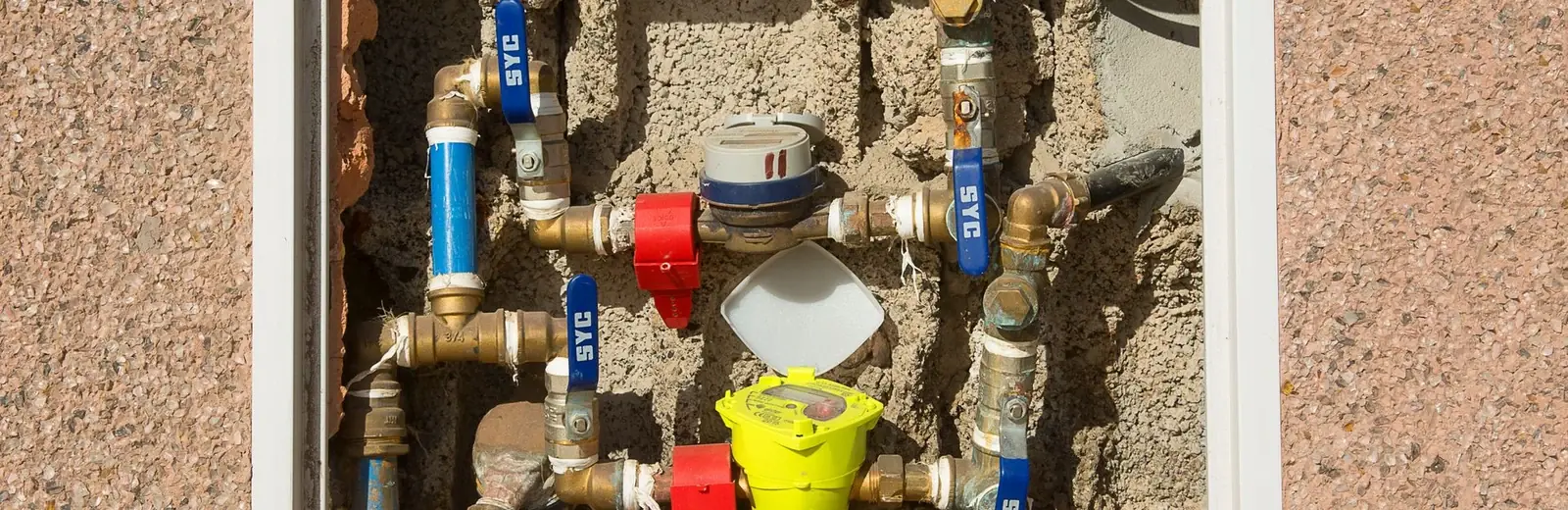
If water is bubbling up in the yard, pooling around the meter pit or the whole house has lost pressure, close the main valve inside the house and keep people and pets away from soft, sunken ground. Then call our 24/7 line at (855) 575-2890.
A water service line is the underground pipe that carries water from the meter pit or curb stop valve into your building. Water service line repair fixes a leak or break in that pipe, and replacement swaps out the full run when the pipe is worn out.
We dispatch for service line failures at night and on weekends, because a broken line loses water and can undermine soil, driveways and foundations while you wait. Permit-required work follows the Ohio Plumbing Code, which was updated effective March 1, 2024.
Water at the meter pit or in the yard: what to do first
Close the main shutoff inside the house, usually near where the pipe enters the foundation. This stops the flow on your side of the meter. Then open a faucet at the lowest point to let the remaining pressure out.
If the leak is at the meter pit or the water is coming from the City side, do not try to fix it yourself. Call us, and if the City's main is involved, report it to the City utility. Keep vehicles off soft ground, since a long leak can wash soil out from under a drive or walk. Take photos and note when the water appeared.
Who owns which part of the line
In Sidney the City handles the water main out to the meter pit. The property owner is responsible for the service line from the meter pit or curb stop valve into the building. A repair on your side is your cost, and a problem on the City side is the City's.
That split matters on the phone call. Tell us whether the water is on the street side of the meter or the house side, and where your meter pit or curb stop sits. We can sort out the rest after we see the site. If you are unsure, our leak detection visit can confirm which side the water is leaking from.
Signs a service line is leaking or failing
Soggy or sunken ground
A patch of lawn that stays wet in dry weather, or a dip over the pipe route, often means water is escaping underground.
Meter runs with everything off
If the dial or low-flow indicator keeps moving with every fixture closed, water is leaving somewhere beyond the meter.
Sudden bill jump
A rise with no change in how you use water points to a leak. Run a meter test before assuming the cause.
Rusty or cloudy water
Corroded pipe sheds rust, and a break can pull dirty water or air in. Run a tap for a minute. If the color persists, call.
Noise at the meter or pipe
A hiss or hammering near the meter or where the line enters the house can mean a split or loose connection.
Shut the main and call. A plumber is on the line at any hour.
Low water pressure: service line, valve or something else
Low pressure at every tap usually points to something before the branches, like a partly closed main valve, a failing pressure reducer, a clogged old pipe or a leaking service line. Low pressure at one fixture is more often a clogged aerator or a bad cartridge.
Check whether the shutoff valve at the meter and the house main are fully open, then compare hot and cold. If both are weak at every fixture, the cause is probably the incoming line. If only hot is weak, look at the water heater side. A pressure gauge on an outdoor spigot tells us what the line is delivering before we pick a fix, and we can confirm the cause rather than swap parts by guess.
Trenchless versus open trench replacement
Both methods replace the pipe. The right one depends on what lies above the line and how accessible the route is.
Open trench
- Digs the full length of the old line
- Lets us see and fix the surrounding pipe and fittings
- Disturbs lawn, driveways and walks that cross the route
- Often the simpler choice for a short run or a line that is easy to reach
Trenchless
- Uses small pits at each end instead of one long trench
- Pulls or bursts a new pipe through the old path
- Spares drives, patios and mature landscaping
- Needs suitable soil and a line that is straight enough to work
Pipe materials and what they mean for replacement
Service lines have been made from copper, plastic, galvanized steel and, in older systems, lead. We do not assume which one you have. Copper and plastic lines often last a long time. Galvanized pipe tends to corrode from the inside, which narrows it and lowers flow. Lead is no longer used for new water lines.
The City's service line inventory is complete, and customers can report their line material to the City at 937-498-8117 or serviceline@sidneyoh.com. If you do not know what you have, reporting what you find helps the City, and the inventory is viewable at the Service Center on S. Vandemark Rd. We will identify the pipe on the visit and discuss replacing it if it is a concern.
From the first call to water back on
Every job is different. This is the usual order of a service line repair or replacement.
Phone triage
You tell us what you see and where the shutoffs are. We tell you what to close and book the soonest appointment.
Locate and mark
We confirm the route of the line and which side of the meter the problem is on. Utility marks are requested before any digging.
Cut, repair or replace
We repair the failed section or replace the whole run, whichever the condition of the pipe calls for.
Test and restore
We pressure test the new pipe, open the valves slowly, flush the line and check every tap for clean flow. Restoring the surface comes next.
Call 811 before the ground is opened
Ohio law requires notice before any digging. Call Ohio811 at 811 or 800-362-2764. Allow at least 2 working days, and you can call up to 16 days ahead. Utilities then mark their buried lines, so a shovel or machine does not hit gas, electric or telecom.
That wait is why a planned replacement takes some scheduling, while an active leak is handled right away with a shutoff and a temporary plan. Stay out of the yard if a line is leaking heavily, and do not dig on your own to look for it.
What affects the price of a service line job
Prices depend on the length, the depth and what must be restored on the surface. You get a clear price before work starts, and we explain whether repair or replacement makes sense.
Insurance often treats a sudden break differently from slow, long-term seepage, and some policies do not cover underground lines at all. Ask your insurer before work begins.
Related repairs that often come up
A leaking line often shows first as a pattern in the house, so we sometimes start with leak detection to find the spot. If a pipe has burst, see our burst pipe repair page, and if the old pipe inside the house is also failing, repiping may be the next conversation. We also serve Botkins and other nearby towns.
Common questions
Do you handle water service line repair emergencies at night or on weekends in Sidney?
Yes. Our line is open 24/7 and we dispatch for broken service lines at night, on weekends and on holidays. We tell you what to shut off while you wait and book the next open appointment.
Who is responsible for the water line to my house?
In Sidney the property owner is responsible from the meter pit or curb stop valve into the building. The City handles the main out to the meter pit. We help you find which side your problem is on.
How do I know if my service line is leaking?
Look for a wet or sunken patch of ground, a meter that moves with everything off and a rising bill. Run a meter test and call if the dial keeps moving.
How do I report what my service line is made of?
The City's inventory is complete, and customers can report line material at 937-498-8117 or serviceline@sidneyoh.com. You can also view the inventory at the Service Center, 415 S. Vandemark Rd.
Do I need to call before digging?
Yes. Call Ohio811 at 811 or 800-362-2764 at least 2 working days before digging so buried utilities are marked. Do not dig until the marks are placed.
Is trenchless replacement always possible?
No. It depends on the soil, the route and the condition of the old pipe. We look at the site and explain whether trenchless or open trench is the better fit.