
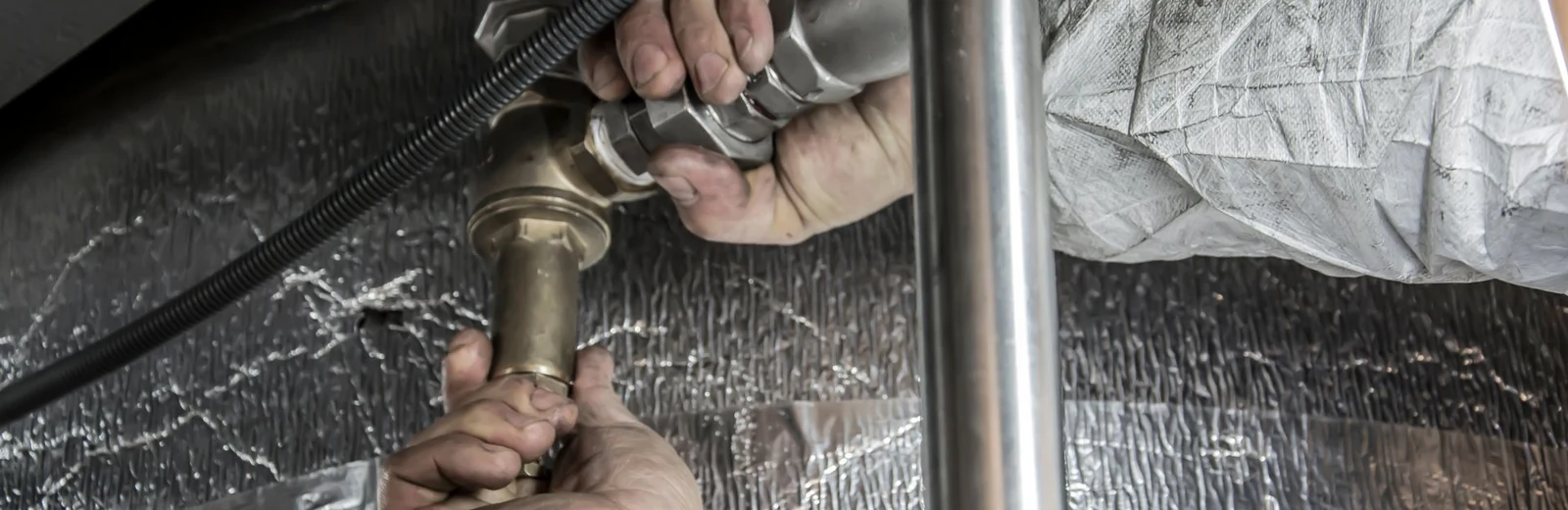
Repiping means replacing the water supply pipes inside a building, either the whole network or the worst sections. It is usually considered when pipes are old, rusted from the inside or leaking in more than one place, and a repair here and there no longer holds.
Most repipes are scheduled, so we look at the house first and give you a clear price before work starts. If a pipe is actively leaking, close the main shutoff and call our 24/7 line at (855) 575-2890 so we can deal with the leak before the bigger plan.
This page covers the signs of failing pipe, the choices of material and scope, and what the work looks like day to day.
Why older Sidney homes come up in repipe conversations
The City's own housing plan, written around 2016, estimates that roughly 30 percent or more of the housing stock was built before 1950. Homes of that age often have original or early replacement plumbing, and galvanized steel was a common choice for water lines in those decades.
What this means for you is practical. If you own an older house in Sidney and have never had the water pipes replaced, ask a plumber to look at the pipe where it is visible in the basement or crawlspace. The plan's figure is an approximate estimate, so it tells you the stock is old, not that your house is.
Signs galvanized or old pipe is failing
Galvanized pipe is steel with a zinc coating. Over time it corrodes from the inside, and the buildup narrows the opening. These signs, especially several together, suggest it is nearing the end of its life.
Low pressure that keeps getting worse
Rust and mineral buildup shrink the opening, so flow drops at several fixtures, often first in the shower. A pressure problem at every tap can also come from the incoming line, so a service line check belongs on the list.
Rusty or brown water
Water that comes out brown after sitting overnight can mean the pipe is shedding rust. Run the tap for a minute. If the color clears quickly, it may be a water heater or fixture issue instead.
Repeated leaks in different spots
One pinhole can be fixed. Several pinholes in a few years often mean the whole run is thin.
Green or white crust on joints
Crusty fittings, stains on walls or ceilings and damp insulation point to slow leaks at connections.
Hot water flows weaker than cold
Hot lines scale and corrode faster. If only hot water is weak, check the water heater too.
Patching old pipe versus replacing it
Spot repairs make sense when the pipe is mostly sound. When corrosion is everywhere, they only chase the next leak.
Keep patching
- Lower cost for a single failed joint
- Fine when the rest of the pipe is in good shape
- New leaks tend to appear nearby on old galvanized pipe
- Does nothing for pressure lost to buildup inside the pipe
Repipe
- Replaces the pipe that is restricting flow
- Ends the cycle of repeated leak repairs
- Can be done in sections if the budget needs it
- Can open walls, so access is part of the plan
Call to talk through repair versus repipe.
Whole-house repipe or only part of it
How much to replace depends on where the trouble is and how the house is built. This table is how we usually sort it on the first visit.
| Situation | Usual scope | Why |
|---|---|---|
| One bathroom with a failing run | Partial repipe | Fixes the bad section without opening the whole house |
| Rust and low pressure at most fixtures | Whole-house repipe | The restriction is throughout the system |
| Basement lines are old, upstairs is newer | Partial, by zone | Replace the old zone and connect to sound pipe |
| Mixed pipe types with leaks at transitions | Whole-house or large partial | Joints between old and new metals can corrode |
We confirm the scope after we see the pipe, the layout and the access.
Pipe materials in general
PEX
Flexible plastic tubing that bends around corners, so it often needs fewer openings in walls. It is common in remodels. It cannot be used everywhere, such as in direct sunlight.
Copper
A long-used rigid metal pipe that resists corrosion in most water. It takes more joints and more labor to install.
Galvanized steel
The older choice that is now mostly replaced. It corrodes from inside and is usually what we recommend replacing.
Mixed systems
Some houses use two types. Fittings between different metals need the right transition parts to avoid corrosion.
Walls, access and how the work is staged
Plumbers reach old pipe through basements, crawlspaces, closets and small openings cut in drywall. The goal is to keep the openings few and patchable. In a house with a finished basement ceiling, we may be able to run pipe through the joists with minimal drywall work.
The job is usually staged so the water is off for part of a day, not for days. How long depends on the house. A small ranch with open basement access moves faster than a two-story with finished walls. We plan the shutoffs with you and tell you when the water will be back so you can fill containers if you need them.
Patching and painting the openings is typically separate from the plumbing work, so ask what is included before you agree to a plan.
From the walk-through to turning the water on
Walk the house
We trace the main lines, look at fittings and test pressure to see where the problem lies.
Agree on scope and price
You hear the options, the access plan and the price before we start work.
Replace in sections
New pipe is run, connected to fixtures and tested by section so the water stays on where it can.
Pressure test and sign-off
We test the whole system under pressure, check every connection and walk you through the shutoffs.
Do you need a permit to repipe
The Sidney-Shelby County Health Department issues plumbing permits, and its rule is that anyone doing plumbing work in Shelby County needs a plumbing permit, with an exception for minor repairs. A repipe usually involves rearranging pipe, so it is not minor. Call the Health Department at 937-498-7249 and describe the job.
Ask the department for its list of registered plumbers, and ask any plumber you hire for their registration. Ohio also updated its plumbing code effective March 1, 2024, so ask what the inspector will check.
What affects the cost of a repipe
A repipe is priced on the house, so we do not quote a figure before seeing it. You get a clear price before work starts.
Insurance usually pays for a sudden burst or accidental discharge differently from gradual deterioration, and replacing old pipe because it is worn out is often not covered. Ask your insurer what applies.
Before and after a repipe
If you only suspect a hidden leak, start with leak detection to confirm where the water is going. If a pipe has already burst, burst pipe repair stops the damage first. We take calls from nearby towns such as Anna as well.
Common questions
How do I know if I have galvanized pipe?
Galvanized pipe is gray steel, often with rust-colored staining at the joints, and a magnet will stick to it. Copper looks brown or green and a magnet will not stick. We identify it on the walk-through.
Will I be without water during a repipe?
Usually for part of a day, not for days. The exact time depends on the house and how the work is staged. We tell you in advance when the water will be off.
Do I need a permit to repipe my house?
Most likely. Anyone doing plumbing work in Shelby County needs a plumbing permit from the Sidney-Shelby County Health Department, with an exception for minor repairs. Call 937-498-7249 to confirm for your job.
Can I repipe just part of the house?
Yes. A partial repipe replaces the failing zone and connects to sound pipe. We explain which sections make sense and which should not be left behind.
Is PEX or copper better?
Both work. PEX is flexible and often needs fewer wall openings, while copper is rigid and long established. The right choice depends on the house, the access and your preference.
Will repiping fix my low water pressure?
If old galvanized pipe is the cause, yes, often. Low pressure can also come from a failing service line or a valve, so we test first before recommending a repipe.