
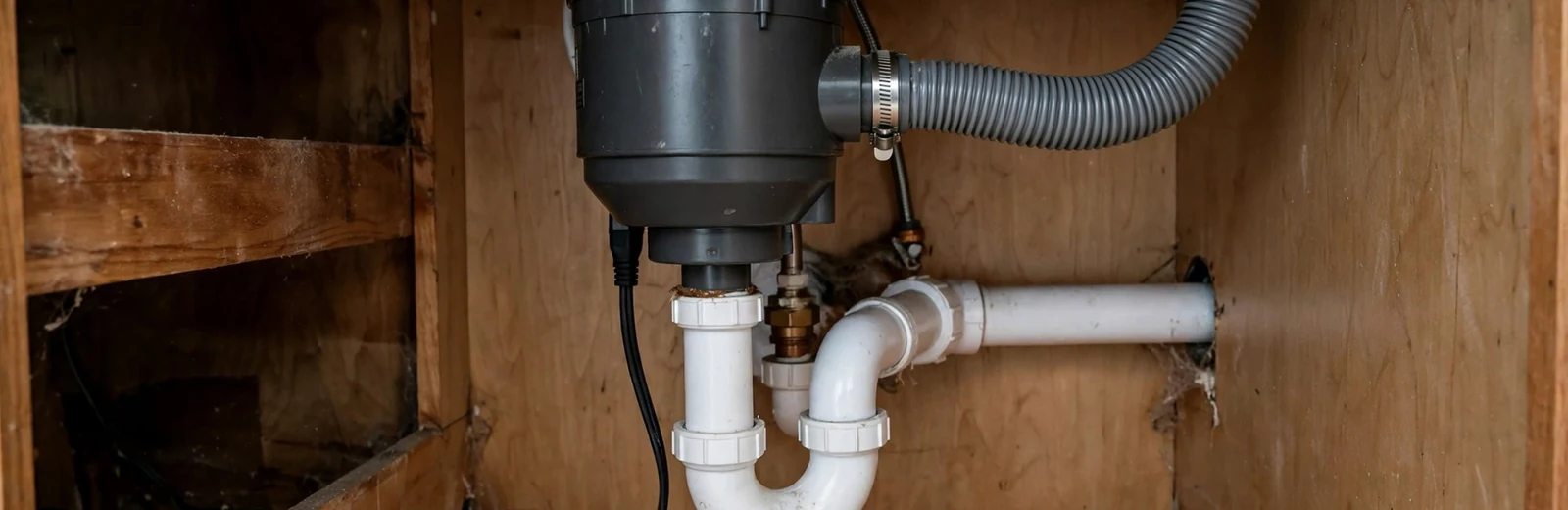
A disposal that leaks under the sink or will not drain needs the power off before anything else. Switch off the wall switch, then turn off the breaker for the unit, and keep your hands out of the drain opening. Call our 24/7 line at (855) 575-2890 if water is reaching the cabinet floor.
Garbage disposal repair is the work of freeing a jammed grinder, restoring a motor that has stopped, and sealing the leaks that form where the unit meets the sink or the dishwasher hose. Installation means removing the old unit and mounting a new one with its electrical connection and drain.
We take disposal calls at night and on weekends because a leak inside a cabinet can soak a floor while the household sleeps. Slower problems get the next open appointment, and we tell you what to leave alone until then. Permit-required work follows the Ohio Plumbing Code, which was updated effective March 1, 2024.
Leaking or smoking disposal: what to do first
Power comes first, because water and a live motor share one small cabinet. Turn off the breaker before you reach under the sink. If you smell burning or see smoke, leave the breaker off and do not run the unit again. Never put your hand into the grinding chamber, even when the unit seems dead. Use a flashlight and tongs if something has to come out, after the power is confirmed off.
Close the two supply valves under the sink if water is spraying from a hose, then set a bucket under the leak. Call us if the leak keeps going, if the cabinet is wet, or if the cord or wiring is damp.
Four disposal faults and what they mean
Most disposal calls come down to one of four conditions. Each has a different fix and a different level of urgency.
The motor hums but nothing spins
That sound usually means the grinding plate is jammed. With the power off, many units let you turn the plate with a hex key set into a socket at the base, which frees most jams. If it turns freely and still hums, the motor may be failing.
Nothing happens when you flip the switch
Look for the red reset button on the bottom of the unit. It trips when the motor overheats or overloads. If it trips again right away, the motor, the wiring or an obstruction needs a closer look.
Water leaks from the top flange
The seal between the sink and the disposal has failed. The mounting ring is loosened and reseated with fresh putty or a gasket, and some leaks mean the sink flange is cracked.
Water leaks from the dishwasher connection
A loose hose clamp or a cracked nipple on the side of the unit lets dishwasher water drip. It is a small repair, but it also means the drain has been backing into the unit.
What you can try and what to hand off
Some steps are safe for a careful homeowner. Others carry risk of injury or water damage.
Reasonable to try
- Switch off power at the breaker, then turn the grinding plate with a hex key at the base.
- Press the reset button once after the unit has cooled for several minutes.
- Remove visible items from the opening with tongs, never with fingers.
- Run cold water and clear the sink strainer before judging that the drain is blocked.
Better handled by a plumber
- A leak from the flange, the housing or the dishwasher connection.
- A motor that hums again after a jam is cleared.
- Any damp wiring, scorched smell or tripped breaker that comes back.
- A replacement that needs a new electrical connection or a change to the drain.
Cut the power at the breaker and call. A plumber is on the line at any hour.
Repair or replace the disposal
A jam or a reset is a repair. A leak from the housing, a seized motor, or a unit that has been rebuilt more than once is a replacement. A disposal that leaks from the body cannot be sealed, because the leak is coming from inside the casing. Age also matters, since seals and bearings wear in step with the rest of the unit.
Installing a new unit means turning off the power, disconnecting the drain pipes and removing the old unit from the mounting ring. The new disposal is mounted, the electrical lead is reconnected and capped, the drain is rejoined, and the dishwasher hose is attached. We then run water through it and check each joint for seepage.
Sinks with two bowls add a wrinkle. One bowl holds the disposal and the other drains through a tee. The drain from the disposal side must meet the second bowl's drain properly, or the sink will back up. We check that connection every time.
How a disposal call runs
Confirm the power is off
We make sure the unit is dead before we touch it, and test it after the repair.
Open the cabinet and look
We check the hoses, the flange, the housing and the trap for the true source of the water.
Present the options
You hear whether repair or replacement is sensible, with the price, before work starts.
Finish and run it
We test the unit under running water and look for slow drips before we leave.
What shapes the price of a disposal job
A phone quote would be a guess because the unit, the electrical connection and the sink layout all change the work. After we see the disposal, you get a clear price before work starts.
Insurance often treats a sudden failure that floods a cabinet differently from a slow leak that went unnoticed, so photograph the damage and ask your insurer how your policy reads.
Keeping the disposal and the drain healthy
Fibrous waste such as celery and corn husks tends to wrap around the grinding parts, and grease can coat the drain pipe and harden. Coffee grounds can pack into a dense layer in the trap. When a disposal slows and the sink also drains slowly, the blockage may be in the pipe, which is a job for drain cleaning rather than a new motor.
Run cold water while the unit works and for a short time after, so waste moves past the trap. If you also notice a drip at the sink spout, the kitchen fixture may need service too, and our faucet repair crew can do both in one visit.
Related work around the kitchen sink
A wet cabinet that is not coming from the disposal can mean a supply line or a hidden pipe, and leak detection helps find a slow source before the cabinet base swells. We also serve households in Piqua and the villages around Sidney.
Common questions
Do you handle garbage disposal repair emergencies at night or on weekends in Sidney?
Yes. Our line is open 24/7, including nights, weekends and holidays. If water is leaking into the cabinet, we dispatch right away. A slow or minor problem gets the next open appointment, and we tell you how to hold it until we arrive.
Why does my disposal hum but not spin?
Usually the grinding plate is jammed. With the power off, a hex key at the base of many units turns the plate and frees the jam. If the unit still hums after that, the motor may be worn out and replacement is the safer path.
Where is the reset button on a garbage disposal?
It is a small button, usually red, on the bottom of the unit. It pops out when the motor overheats. Let the unit cool for several minutes with the power off, then press it once. If it trips again, call a plumber.
Is it safe to put my hand in a disposal if the power is off?
Even with the switch off, we recommend tongs or pliers. The safest practice is to turn off the breaker, look with a flashlight, and keep your hand out of the chamber until the unit is confirmed dead.
Can a disposal be installed at a double sink?
Yes. One bowl holds the disposal and the other drains through a tee into the same trap. The two drains must connect correctly so water can pass, and we check that join and test both bowls with running water.
How do I know if the leak is from the disposal or the sink?
Dry the unit and the pipes with a towel, put a few drops of dye in the sink, and watch where the first drop appears. Top leaks point to the flange, side leaks to the dishwasher hose, and bottom leaks to the housing.