
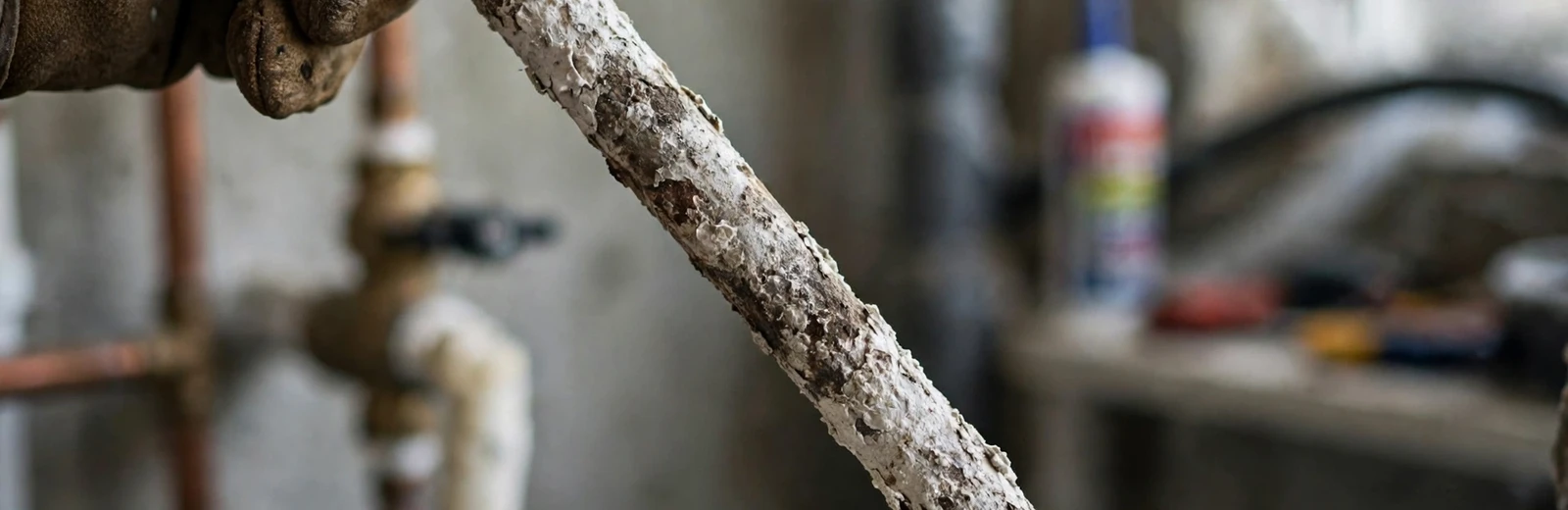
To replace a water heater anode rod, shut off power or gas, close the cold water supply, relieve pressure and drain some water from the tank. Then unscrew the old rod from the top of the tank with a socket and breaker bar, thread in a new rod with sealant on the threads, and refill the tank before you restore power.
The job is simple in concept and awkward in practice. The rod is often stuck, and many tanks lack clearance above them to pull it straight out. This guide covers the order of work, the tool you probably need, how to decide between a new rod and a flush, and the signs that mean the tank itself is finished.
What the rod is actually doing
The anode rod is a metal rod, often magnesium or aluminum, that hangs inside the tank. Water attacks the rod instead of the steel lining, so the rod wears away in place of the tank. When it is gone, the tank wall becomes the next thing to corrode.
Water chemistry changes how fast that happens. The City's 2025 consumer confidence report listed total chlorine of about 1.6 ppm, and the City's 2022 report listed total hardness of about 113 ppm, in the moderately hard range on the USGS scale. Neither number tells you how fast your rod is wearing, so inspect it instead of guessing.
Check these before you buy a rod
Not every tank is a good candidate. Answer these first.
- How old is the heater? Tank heaters often last roughly 8 to 12 years, and a very old tank may be past saving.
- Is there water on the floor or rust at the base? A leak from the tank body means replacement, not a new rod.
- Is there at least a rod's length of clearance above the tank? If not, you need a segmented rod.
- Is the drain valve working? If it is clogged or leaks when opened, fix that first.
- Is there a manufacturer warranty that depends on maintenance? Read the label before you touch anything.
The replacement, in order
These are general steps. Follow your unit's manual, and stop if anything looks wrong.
Shut off energy and water
Turn the gas control to pilot or off, or switch off the breaker for an electric heater. Close the cold water inlet valve.
Relieve pressure and drain
Open a hot faucet in the house and the pressure relief valve briefly, then drain a few gallons from the tank so the water level drops below the rod.
Loosen the old rod
Remove the cap if there is one, then set a 1-1/16 inch socket on the hex head of the rod. Use a long breaker bar or an impact wrench, since the rod is often stuck. Brace the tank so it does not twist.
Install the new rod
Wrap the threads with plumber's thread-sealant tape or a suitable pipe sealant, thread the rod in by hand and snug it with the wrench.
Refill and check
Close the drain, open a hot faucet, open the cold inlet and let the tank fill. Check the rod fitting for drips, then restore power or gas and relight as the manual directs.
Call and we will inspect the heater and tell you what is worth saving.
Gas and electric cautions
If you smell gas at any point, leave the building, then call 911 and the gas utility emergency number printed on your bill. Do not relight a pilot in a room that smells like gas. On an electric heater, never leave the breaker on while the tank is empty, because an element that runs dry can burn out within seconds.
Problems that come up mid-job
The rod will not budge
Use a longer breaker bar or an impact wrench. If the tank twists or the fitting starts to deform, stop and call a plumber.
Not enough clearance above
A segmented, flexible anode rod folds into the available space and is the usual fix for a tight closet or low ceiling.
The old rod is just a core wire
That means the rod was spent, and the tank has been unprotected for a while. Check the tank for rust and expect a shorter remaining life.
Sulfur or rotten-egg smell in hot water
Some rods can encourage odor in certain water. A plumber can discuss alternate rod types if that happens.
Leak at the new fitting
Drain down, remove the rod and reseal the threads. Overtightening can damage the tank threads.
Water in Sidney and how often to look
Sidney's water comes from groundwater wellfields and surface water intakes, and the City treats it with chlorine. Because the 2022 report listed total hardness of about 113 ppm, mineral scale can also collect in the tank bottom and around the rod. That scale shrinks the heater's working capacity and can make it noisy.
A practical routine is to check the rod every few years, or sooner if hot water gets cloudy or smells off. Ask the City for its current water quality report if you want up-to-date numbers for your address.
Rod swap or flush
These two jobs are often confused. They solve different problems.
New anode rod
- Protects the steel tank from rust.
- Most useful on a middle-aged tank with no leaks.
- Does nothing about sediment already in the tank.
- Requires clearance and a stubborn fitting to come loose.
Tank flush
- Removes sediment and scale from the bottom of the tank.
- Helps with rumbling, slow recovery and reduced capacity.
- Does nothing to protect the tank lining.
- Easy to repeat each year with a garden hose.
When to stop and call a plumber
Call if the rod will not turn, if the tank is leaking, if the burner or element area is corroded, or if you are not comfortable with gas or electric controls. A water heater repair visit can include the anode check, the flush and the safety valves in one trip.
If your tank is past its useful life, the better answer is water heater replacement, and some households use that moment to weigh a tankless water heater. Homeowners in Jackson Center and Fort Loramie can use the same checklist, but should test their own tap or ask the village for water quality information, because we have no published hardness figure for those systems.
Common questions
How often should a water heater anode rod be replaced?
There is no single schedule. Many plumbers check it every few years, and replace it when most of the metal has worn away. Water chemistry and tank age both change the pace.
Does Sidney's water wear out an anode rod faster?
We cannot give a rate. The City's 2025 report listed total chlorine of about 1.6 ppm, and the 2022 report listed total hardness of about 113 ppm, but your own rod is the best evidence. Pull it and look.
Can I replace the anode rod myself?
Many homeowners can, if the fitting breaks loose and there is clearance. Call a plumber if the rod is stuck, the tank leaks, or you are uneasy about gas or electric controls.
What if there is not enough room above my water heater?
Use a segmented anode rod, which is made of short sections on a cable so it can be fed into a tight space. Your plumber can also install a combination rod that fits under a low ceiling.
Will a new anode rod fix a leaking tank?
No. A leak from the tank body means the lining has failed, and the fix is a new heater. A new rod only protects a tank that is still sound.
Do I need a permit to replace an anode rod?
Minor repair in Shelby County is exempt from a plumbing permit, but call the Health Department at 937-498-7249 if you are unsure. Replacing the heater itself is a different question, so ask.