
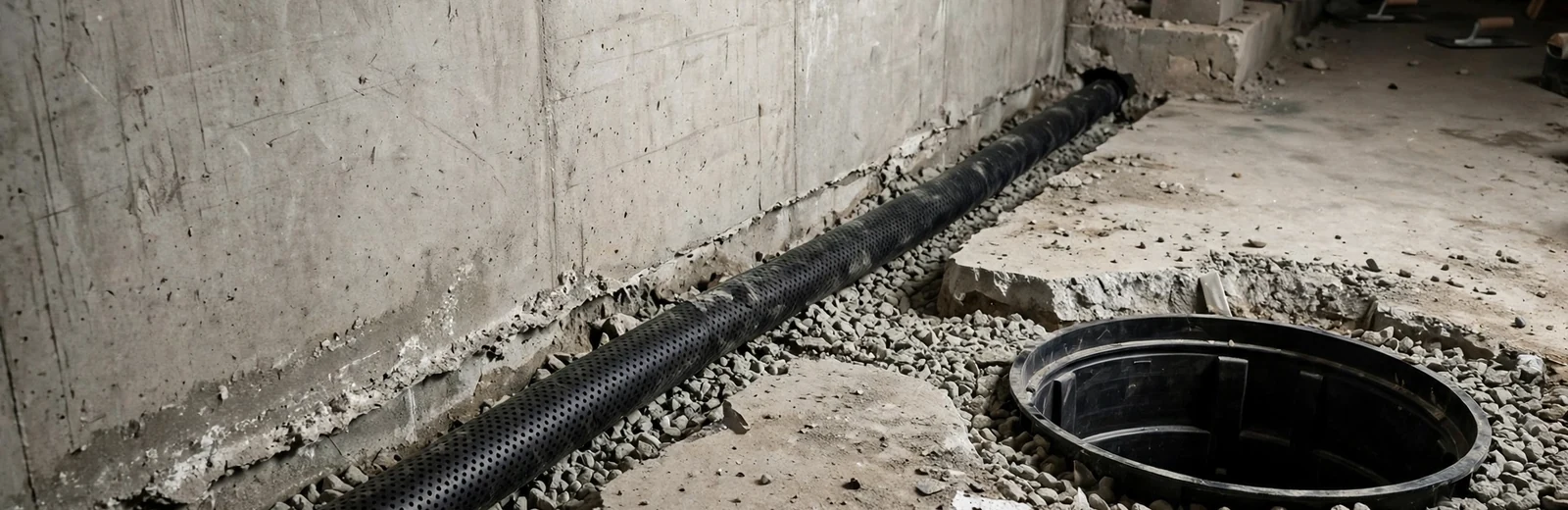
Basement waterproofing is the set of repairs that keep groundwater, runoff and sewer backups out of a basement, or move the water out quickly when it gets in. A plumber handles the parts that involve pipes and pumps, and our line at (855) 575-2890 is open 24/7 if you need to book a visit.
Plumbing is only part of the answer to a wet basement. We handle interior drain systems, sump basins and pumps, backwater valves and drain lines, and we say so plainly when the cause sits in the wall, the grading or the roof.
That honesty saves money. A pump will not fix a foundation crack, and a coat of sealer will not fix a basin that cannot keep up. Permit-required work follows the Ohio Plumbing Code, which was updated effective March 1, 2024.
Start by finding where the water comes from
Water in a basement comes from only a few places. It can seep through the walls, rise through the floor, drop through a crack at the joint where floor meets wall, back up through a floor drain, or leak from a pipe. Each source needs a different fix, and a wrong guess wastes money.
A simple test helps. If the wet spots appear only after rain, the cause is groundwater or runoff. If they appear in dry weather, a pipe may be leaking. If water rises from the floor drain, the sewer line is backing up, and the answer is a drain or sewer repair, not waterproofing.
Before we price any drainage work we look at the walls, the floor drain, the sump basin and the downspouts. You hear what we find before any work begins.
Where plumbing helps and where it does not
These are the parts of basement water control that sit within plumbing work, and the parts that usually belong to another trade.
Interior drain and sump basin
A drain channel along the footing, linked to a sump basin and pump, collects water that reaches the floor and moves it out. This is plumbing work.
Sump pump and discharge
A strong pump matters little if the discharge line is short, clogged or aimed at the foundation. We repair and install the whole path. See our sump pump service for detail.
Gutters, downspouts and grading
Roof water that lands beside the foundation is a common cause of wet basements. Extending downspouts and building a slope away from the wall is a roofer, gutter or yard-grading task, and often the cheapest fix.
Wall cracks and seepage
Sealing or injecting a crack, or repairing failing block or mortar, is a waterproofing or masonry contractor's work. We do not patch walls, and we will tell you if that is the real issue.
Backwater valve
A backwater valve sits in the building drain and closes if sewage flows backward. It addresses sewer backup, not groundwater.
Inside drainage versus outside work
Both approaches deal with the same water in different ways.
Exterior work
- Digs along the outside of the foundation to expose the wall.
- Applies membrane or coating and may replace drain tile at the footing.
- Handled by excavation and waterproofing contractors.
- Gives the wall protection before the water arrives.
Interior drainage
- Cuts a channel in the basement floor along the walls.
- Collects seepage into a sump basin and pump.
- Plumbers install the drain, basin, pump and discharge.
- Manages water that has already reached the floor, with less digging outside.
Describe where the water appears and call. We will tell you what plumbing can fix.
River history and what it means for your basement
The Great Miami River gauge at Sidney recorded a record crest of 19.6 feet in March 1913. It reached 15.91 feet in January 1959 and 15.61 feet in December 2013. All three sit above the 14.6 foot moderate flood category listed for the gauge.
For a basement near the river, the practical meaning is that groundwater can rise and stay high for days. A sump pump with a backup, and a discharge that carries water well away from the house, matter more there than in a house on higher ground.
The City of Sidney's 2009 Flood Abatement Program offered assistance for backwater valve installation to owners with repeated backups. Ask the City whether assistance is currently available before you pay for a valve. The City also names sump pump and foundation drain connections to the sanitary sewer as sources of inflow, so ask where a discharge may go.
How a wet basement job moves forward
Walk the basement
We trace stains, test the floor drain and look at gutters and the basin to locate the water source.
Sort what is plumbing
We tell you which parts belong to us and which belong to a masonry or waterproofing contractor.
Give options and a price
You hear the options and the price before we start.
Install and test
We set the drain, basin, pump or valve, then run water through the system to prove it works.
What drives the cost of basement water control
Basement work varies from one house to the next, so we give a clear price only after we see the space. A price is stated before work starts, and we do not guess over the phone.
Insurance often treats sudden water entry differently from slow seepage, and policies often exclude groundwater unless you carry a specific add-on. Ask your insurer before you rely on a claim.
Backups, sewer lines and related plumbing
A floor drain that backs up during a storm points to the sewer, not the foundation. In that case a backwater valve may help, and when the pipe itself is damaged, sewer line repair is the real fix.
A basement that stays damp after the pump runs may have a pipe leak that leak detection can find without digging. We work in Sidney and in Anna and the villages nearby.
Common questions
Can a plumber waterproof my basement?
A plumber can install interior drains, sump basins, pumps and backwater valves, which handle water that reaches the basement. Wall cracks, exterior membrane work and masonry repair belong to a waterproofing or masonry contractor.
Does a sump pump stop water from getting in?
No. A sump pump removes water that collects in a basin. It does not stop water from entering the soil around the house. Gutters, grading and drains work together with the pump to manage the water.
What is a backwater valve and do I need one?
It is a valve in the building drain that closes if sewage flows backward from the main. It helps homes that back up during heavy rain. Ask the City of Sidney whether assistance is currently available.
Why does my basement leak only after heavy rain?
Rain loads the soil with water, and the water finds cracks, joints or a floor drain. Downspouts that dump beside the foundation make it worse. Check gutters and the grade before you spend on interior work.
Will interior drainage fix a cracked foundation wall?
It manages the water that comes through the crack, but it does not repair the wall. A crack that widens or shifts needs a structural or masonry contractor to look at it.
How do I know whether the water is from a pipe or from the ground?
Check whether the wet spot grows in dry weather and whether the water meter moves with everything turned off. A dry-weather pattern points to a pipe, and a rain pattern points to groundwater or runoff.